
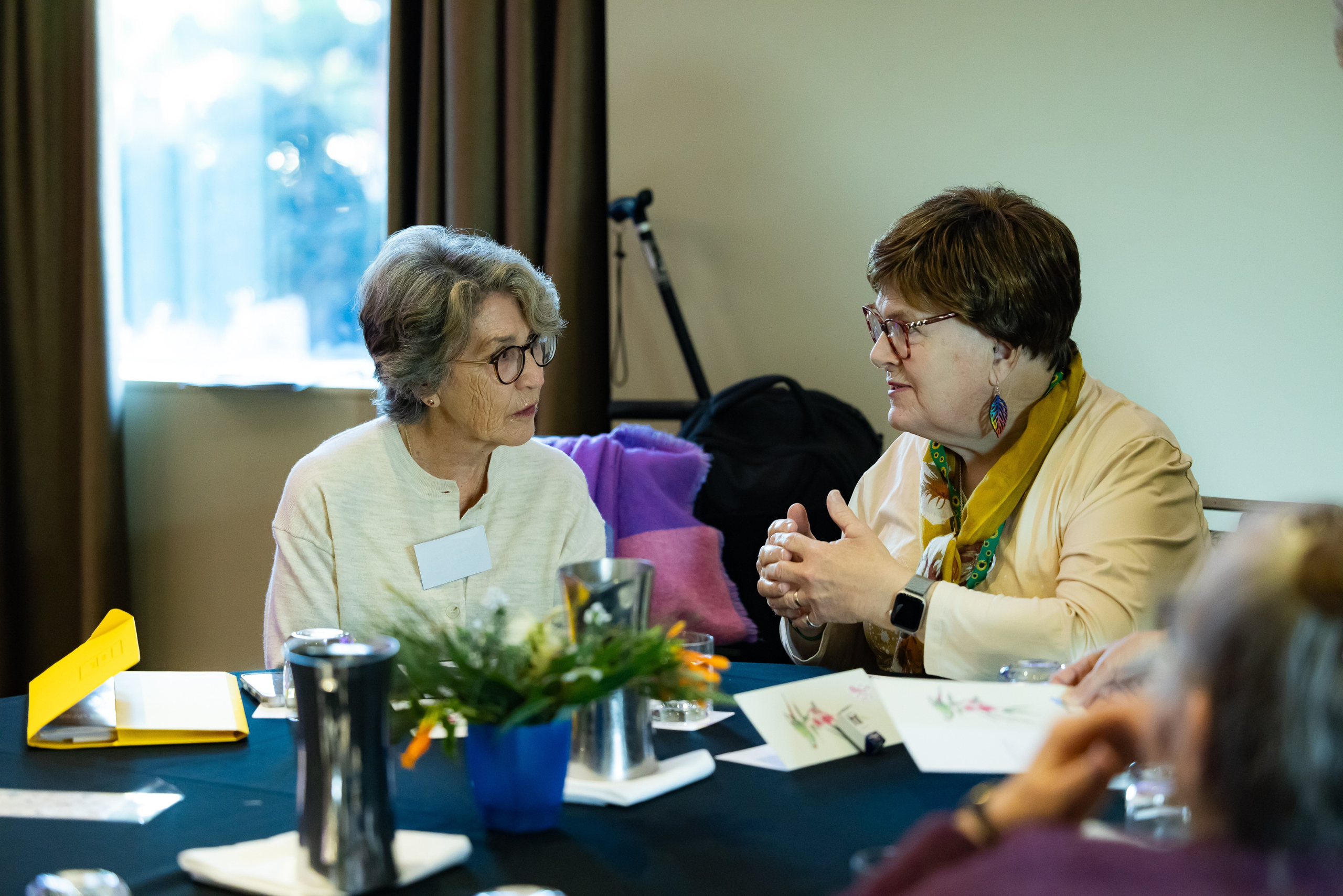
Support at Home reform and the future of the Commonwealth Home Support Program (CHSP) emerged as key concerns during the first face-to-face meeting of the newly reformed National Older Persons Reference Group (NOPRG), held in Sydney this month.
Drawing on their lived and living experience of the aged care system, members shared perspectives on the issues having the greatest impact on older people, providing valuable insights to inform OPAN’s advocacy and policy work.
OPAN CEO Craig Gear said NOPRG members provide direct insight from both their experiences and what they’re hearing from older people in their communities, which helps to ensure advocacy and policy positions are grounded in the realities of aged care.
‘If we’re to influence reform that actually delivers meaningful change for older people, we can’t do it without their perspectives.
‘Legislation with good intent is one thing, but how the system is actually being experienced is what matters, and it’s older people who can tell us that.
‘It was incredibly valuable to bring together such a diverse group of older people from across the country and have those honest, constructive conversations about what needs to change,’ Mr Gear said.
When discussing concerns about Support at Home, members highlighted the critical need to address service wait times, affordability, uncertainty around fees and charges, and the impact of the Integrated Assessment Tool (IAT) algorithm on access to support.
These issues were also highlighted in OPAN’s recent submission to the Support at Home inquiry.
Members also heard from Age Discrimination Commissioner Robert Fitzgerald, who spoke about key human rights developments affecting older people, including the potential for an Australian Human Rights Act and progress towards a proposed United Nations Convention on the Rights of Older Persons.
Aged Care Complaints Commissioner Treasure Jennings provided an update on complaints pathways under the Aged Care Act 2024 and the role complaints data can play in identifying systemic issues affecting older people receiving care.
Mr Gear said the meeting created an important opportunity for direct engagement between older people and government officials.
‘It was so valuable for members to speak directly with leaders and regulators about the issues affecting them and their communities,’ he said.
‘Those conversations help ensure the people shaping policy remain connected to the real-world experiences of older people.’
The meeting also provided an opportunity for members to ask questions about the OPAN Board’s new Strategic Plan 2026-29, which outlines how the network will evolve to meet growing demand for aged care advocacy.
Mr Gear took members’ feedback directly to the OPAN Board during the official launch of the plan the following day.
‘The questions and feedback from members reflect their genuine commitment to the future of advocacy and the aged care system,’ he said.
‘Being able to take those perspectives directly to the Board helps ensure older people’s voices continue to inform the direction of our work.’