
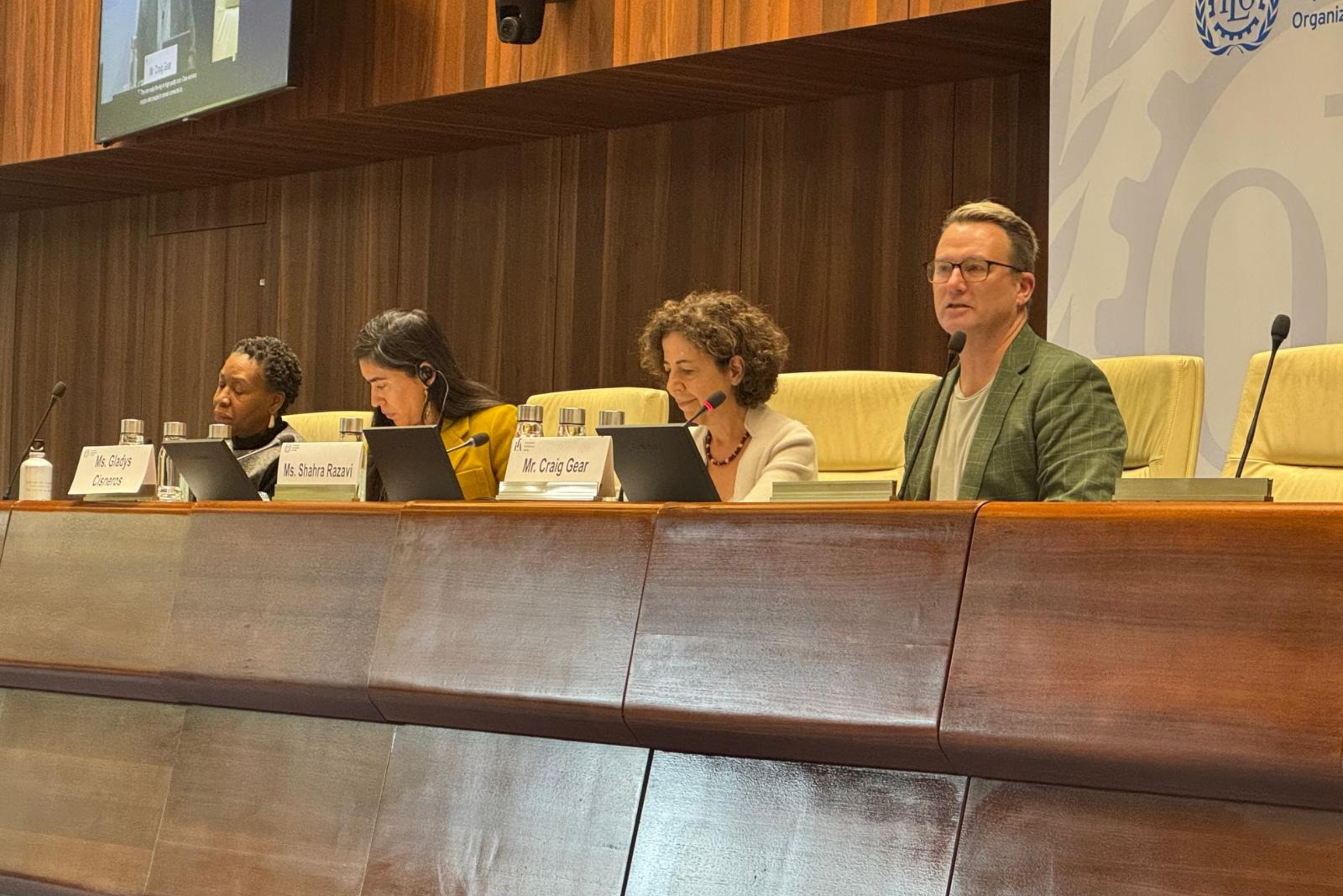
A worldwide push for stronger human rights protections for older people is gaining momentum, and OPAN CEO Craig Gear is helping shape the conversation.
Mr Gear joined global advocates, government representatives and human rights experts from around the world in Geneva for the second session of the United Nations Open-ended Intergovernmental Working Group (IGWG) on the Human Rights of Older Persons.
The session, held from 26–30 October, marked another significant step towards a legally binding international instrument that would set clear obligations for governments to respect, protect and fulfil the human rights of older people.
Why a convention matters
For decades, older people and advocates around the world have called for a dedicated international convention that recognises older people as rights holders, with the same human rights as everyone else.
While human rights are universal, older people continue to experience ageism, discrimination and barriers to exercising their rights – including the right to make decisions about their own lives, participate in their communities and access appropriate care and support.
Mr Gear said the development of an international convention was an important opportunity to address these inequalities.
‘Human rights are universal and indivisible, yet older people continue to face unique barriers to exercising those rights because of ageism and discrimination,’ he said.
‘The time for arguing about the need for a convention has been exhausted. It’s time to recognise that human rights are older people’s rights.’
Australia’s aged care reforms inform global rights debate
Mr Gear contributed to the discussions under the guidance of leaders from the International Federation on Ageing (IFA) and delivered two interventions, speaking on state obligations and the practical measures needed to uphold the rights of older persons, before providing a closing response on behalf of civil society organisations.
Drawing on insights from the implementation of Australia’s new rights-based Aged Care Act over the past year, his message was clear: legislation alone cannot improve outcomes for older people. There must be practical and measurable obligations established.
‘The realisation of rights requires appropriate resources, education programs for public officials and service providers, and awareness raising initiatives to ensure older people are aware of those rights and how to exercise them,’ Mr Gear said.
He also emphasised that older people must retain autonomy and the right to make decisions about their own lives. He said a future convention must recognise the diversity of older people, including First Nations peoples and those with intersecting experiences of discrimination.
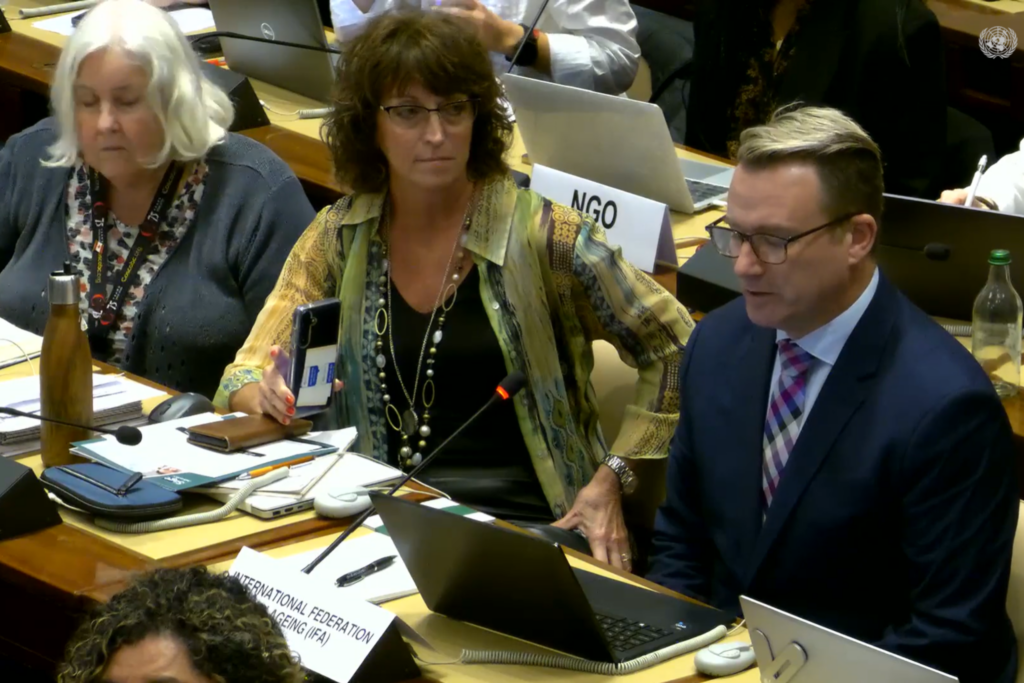
OPAN CEO Craig Gear presenting at the UN 5th Meeting, 2nd Session of the Intergovernmental Working Group on Older Persons (IGWG)
Quality care and decent work go hand in hand
While in Geneva, Mr Gear also contributed to discussions at an International Labour Organization event exploring the intersection between the rights of older people and the rights of care and support workers. He highlighted the two cannot be treated as competing interests.
‘We often talk about quality care and decent work as separate goals. But they are mutually dependant,’ he said.
‘When worker’s rights are protected, when they are supported with appropriate training and fair working conditions – they are better able to support older people to enjoy their rights.’
What happens next
Australia is playing an important role in shaping the proposed instrument, with Australia and Brazil co-facilitating work on the rights section.
The significance of the work was highlighted by UN Deputy High Commissioner for Human Rights Nada Al-Nashif in her opening address in Geneva. She noted that, for the first time in many regions, the number of people aged 60 and over exceeds the number of children under five.
By 2050, older people are expected to represent more than one-fifth of the global population.
While a new convention alone will not resolve every challenge, it could provide a powerful foundation for stronger laws and policies, greater government accountability and a shift in how societies understand and value ageing.
For OPAN, contributing to this global effort is an extension of its commitment to ensuring older people are recognised as individuals with rights, choices and agency.
The working group’s next sessions are expected to take place in July and November 2027.