
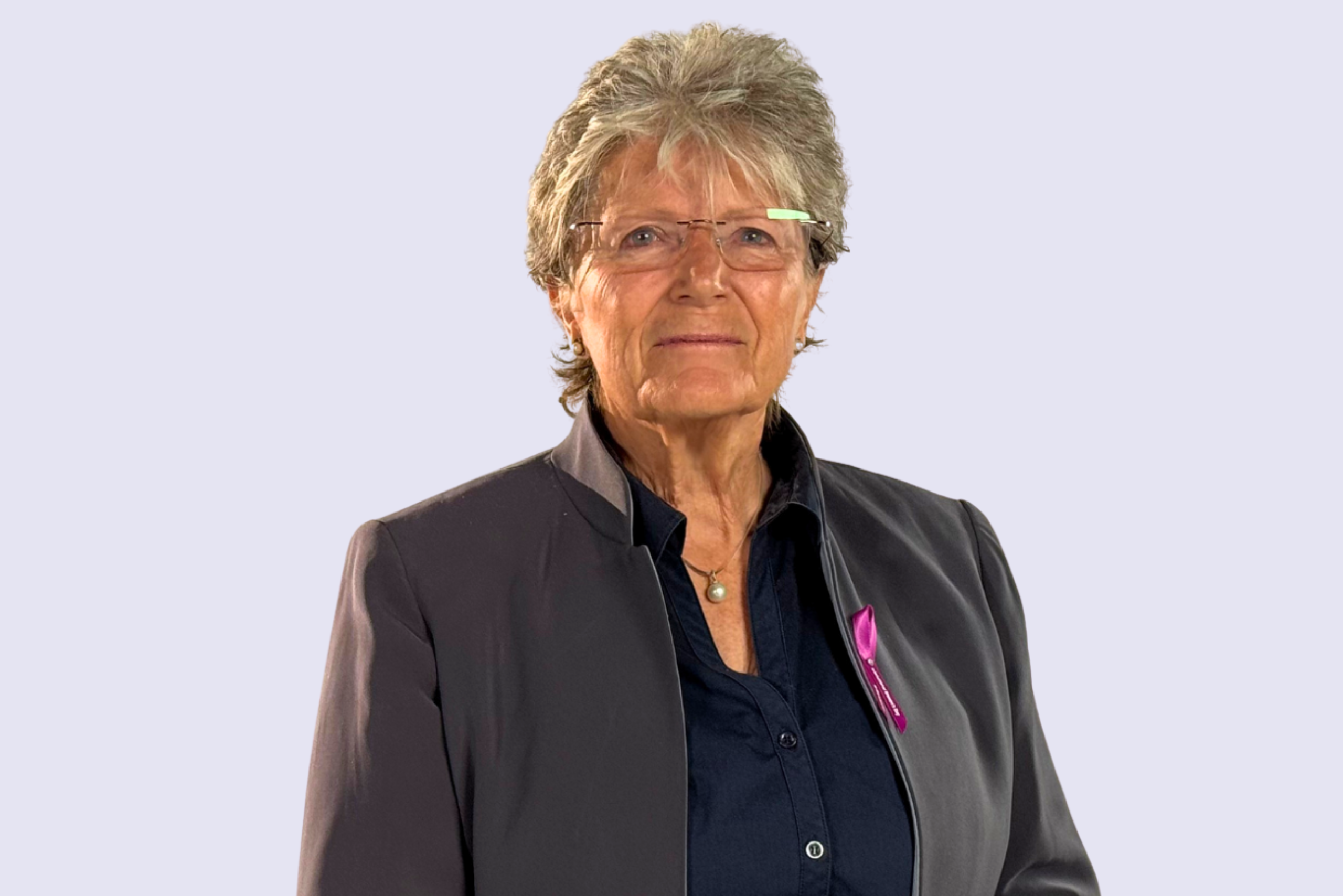
Beverly Baker, National Older Women’s Network President and member of OPAN’s National Older Person’s Reference Group
When Beverly Baker returned from Geneva recently, she brought home something she hasn’t always felt in discussions about older people’s rights: optimism.
‘People are getting it.’
The National Older Women’s Network President and member of OPAN’s National Older Person’s Reference Group travelled to Switzerland to support work on a proposed United Nations Convention on the Rights of Older People, an international agreement aimed at protecting the dignity, equality and rights of older people around the world.
For Beverly, the work is closely linked to another issue she is passionate about addressing – elder abuse.
‘Elder abuse is a worldwide phenomenon. We have a worldwide ageing population, and it seems to be increasing,’ Beverly said.
‘That’s why I was in Geneva. We’re working on a convention for the rights of older people because it’s obviously slipping through the nets.’
What is elder abuse?
Elder abuse is any act, or failure to act, that causes harm or distress to an older person within a relationship where there should be trust.
Abuse can be physical, emotional, financial, sexual or social, and can also involve neglect. It can occur within families, communities and aged care settings.
Recognising elder abuse
One of the challenges with elder abuse is that it does not always look the same, Beverly said.
It may be someone controlling your finances, pressuring you into unwanted decisions, or gradually undermining your confidence and independence.
While there can be warning signs, everyone’s circumstances are different, because everyone’s life is different.
‘What might be perfectly normal for someone else may be unacceptable for you,’ Beverly said.
If an older person is questioning whether a situation feels right, Beverly encourages them to trust their instincts and seek support.
‘There are a range of things you can do, but it’s getting the courage to do that and accepting that what has been happening to you isn’t right, and you need to now do something about it,’ she said.
Feeling empowered to speak up
Despite one in 6 older people experiencing abuse, many never speak up.
Some older people may feel ashamed or fearful of the consequences. Others don’t recognise it as abuse or worry about damaging important relationship.
‘They are often afraid if they do something about it, they might lose the support, the network and everything that they had,’ Beverly said.
But remaining silent can also come at a cost.
‘Once you’re feeling that disempowered and worthless, you fall into depression.
‘The loss of that person because of that is unconscionable,’ she said.
For people experiencing abuse, Beverly believes one of the most powerful first steps can be talking to someone you trust.
‘You’ve got to be able to let off steam, as you develop the strength within yourself, and the ideas within yourself as to what your next step should be,’ she said.
She highlighted that older people grew up in a time when power dynamics within relationships were different.
‘A lot of people, particularly older women who were brought up in a generation where power and couple dynamics were different, don’t understand that they are being abused. They think it’s perfectly normal. That’s how it’s always been.’
Speaking to a trusted friend, family member, advocate or support service can help older people recognise harmful behaviour and consider their options.
‘The most important thing is to be heard,’ Beverly said.
‘Abuse often happens in silence, and once you throw some light on that, that’s when you can start getting things to improve.’
Worried about someone else?
If you are concerned about an older person in your life, Beverly’s advice is to start by listening.
‘Talk to the person, build that relationship, and if that person opens up to you, ensure they feel heard,’ she said.
‘Rights rest with that person. Empowerment rests with that person. Your job is to support them.’
It is important to respect the person’s choices and recognise that every situation is different, particularly when family relationships are involved.
Rather than taking over, support the person to make their own decisions and seek help when they are ready, Beverly said.
The impact of ageism
Beverly believes that ageism sits at the heart of the problem.
Older people are often not listened to, spoken over or spoken for. This leads to them feeling devalued and not accepted as being in control of their own life.
‘That seems to be the starting point for everything,’ Beverly said, as it creates conditions where abuse can occur more easily.
Older people have the same human rights as everyone else – the right to be free of abuse, violence, financial abuse.
The proposed UN Convention on the Rights of Older People seeks to strengthen recognition of those rights globally and provide a stronger framework for protecting older people from discrimination, abuse and neglect.
‘We’ve really got to do something about making sure that human rights are absolutely clear and spelled out,’ Beverly said.
Signs of progress
While elder abuse remains a significant issue, Beverly returned from Geneva feeling encouraged by growing international support for stronger protections for older people.
Three years ago, when she attended discussions in New York, many questioned whether a dedicated convention was needed.
‘The language has completely changed. In Geneva, nobody was talking against it,’ she said.
Beverly believes attitudes are shifting as governments and communities increasingly recognise that older people face unique forms of discrimination and abuse that require stronger protections.
‘People are getting it,’ she said.
For Beverly, the message is simple.
‘Elder abuse, in all its forms, wherever it tries to hide, is not acceptable.
‘Every human has all the rights of a human being, and those rights have to be absolutely honoured.’
But it’s not a problem that can be solved without tackling ageism, she said.
‘The key to getting rid of all of this is to attack ageism at its root.’
Watch the Elder abuse: Protecting Rights, Preventing Harm webinar replay to hear more from Beverly and the expert panel.
Where to get help
Immediate response
Call 000
Abuse within the aged care system
Call the Aged Care Advocacy Line on 1800 700 600 for free, confidential and independent advocacy support.
Outside of aged care
Call 1800 Elder Help
Other services
National Domestic, Family and Sexual Violence Counselling Service
Call 1800 737 732
1800respect.org.au
Lifeline
Call 13 11 14 or SMS 0477 13 11 14
lifeline.org.au
Beyond Blue
Call 1300 224 636
beyondblue.org.au
13 Yarn
Call 139 276
13yarn.org.au